.png)


5 Benefits Of Cloud Processing For Small Businesses
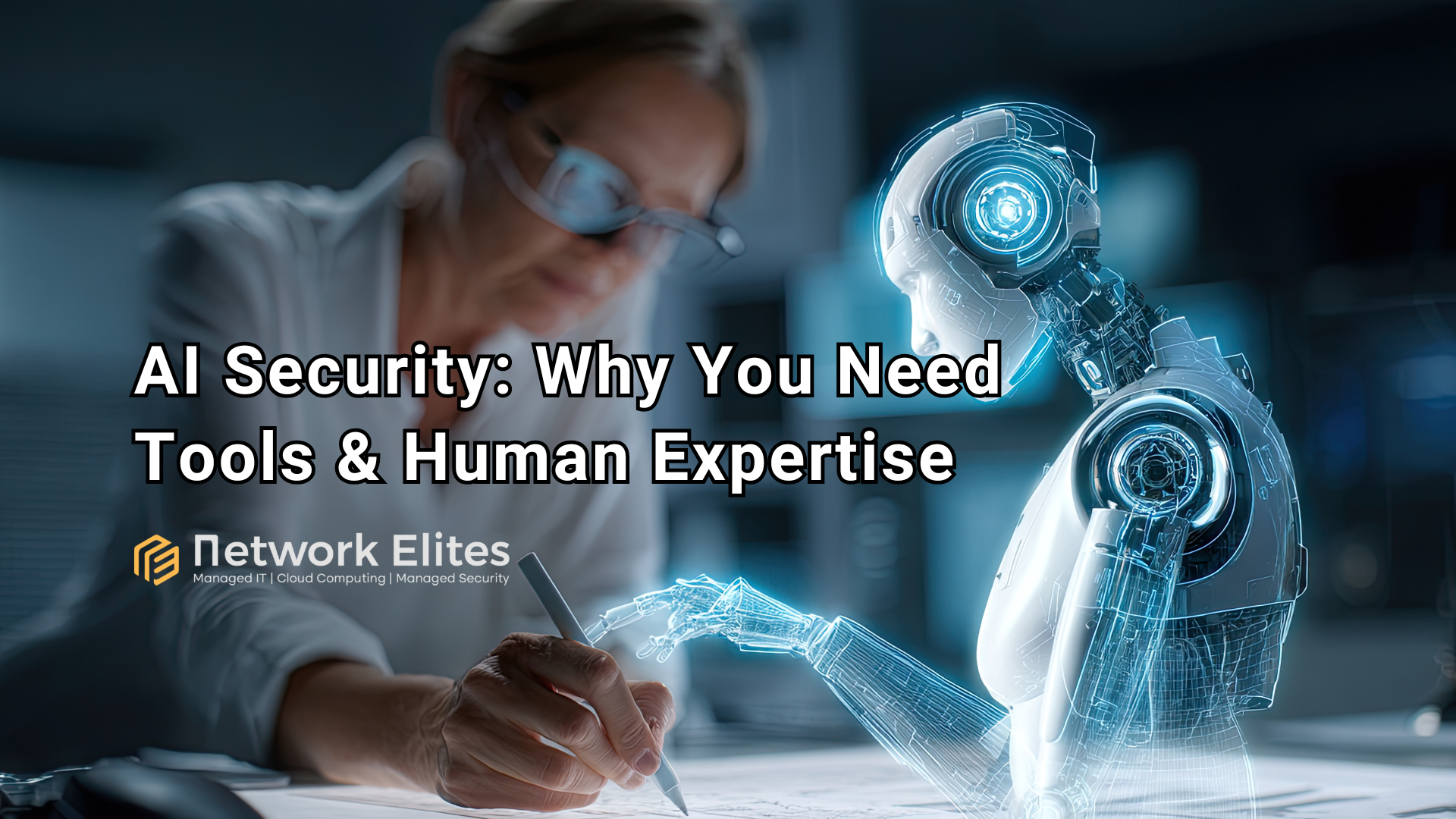
The conversation around cybersecurity is often framed as a battle: human experts versus artificial intelligence. Which is better at defending our digital assets? This debate, however, misses the point entirely. The most effective security strategy isn't about choosing one over the other; it's about integrating them. A truly resilient defense framework leverages the distinct strengths of both AI security tools and skilled human professionals.
AI brings unparalleled speed and scale to security operations, tirelessly scanning vast networks for threats. In contrast, human experts provide the critical thinking, intuition, and adaptability that machines lack. By combining automated efficiency with human ingenuity, organizations can build a security posture that is not only robust but also intelligent and responsive to the evolving threat landscape. This guide will explore why this balanced approach is no longer optional—it's essential for comprehensive protection.
AI security tools have become indispensable in defending against the sheer volume and velocity of modern cyber threats. Their primary advantage lies in their ability to process immense amounts of data at speeds no human team could ever match. This capability allows for proactive threat detection and rapid response, fundamentally changing how organizations protect their networks.
Modern businesses generate a torrent of data, from network logs and user activity to system alerts. Manually sifting through this information for signs of an attack is a monumental task. AI-powered security information and event management (SIEM) systems can analyze millions of events per second, identifying anomalies and potential threats in real-time. This automation allows security teams to move from a reactive to a proactive stance, catching threats before they can cause significant damage.
Many essential cybersecurity tasks are repetitive and time-consuming, such as patching vulnerabilities, managing access controls, and responding to low-level alerts. AI can automate these functions, freeing up human experts to focus on more complex and strategic challenges. For example, automated response systems can instantly quarantine an infected device or block a malicious IP address, containing a threat within seconds of detection. This not only improves efficiency but also reduces the risk of human error in critical, time-sensitive situations.
While AI excels at handling scale and speed, it operates based on algorithms and pre-defined rules. It lacks genuine understanding and the ability to think outside its programming. This is where human expertise becomes critical. Seasoned cybersecurity professionals bring a level of nuanced understanding, creativity, and strategic insight that AI simply cannot replicate.
Cybersecurity is not always a black-and-white issue. An AI tool might flag an unusual network activity as malicious, but a human expert can investigate the context. Was it a new employee accessing files for the first time, a legitimate software update, or a genuine breach? This contextual analysis requires critical thinking and an understanding of the business's unique operational environment. Human analysts can distinguish between false positives and real threats, preventing unnecessary disruption and focusing resources where they are most needed.
Attackers are constantly devising new and sophisticated methods to bypass automated defenses. These novel threats, often called zero-day attacks, have no known signature for an AI to detect. Human experts, however, can use their experience and intuition to identify subtle signs of a new attack vector. They can think creatively, connect seemingly unrelated dots, and adapt their strategies on the fly. This adaptability is crucial for defending against advanced persistent threats (APTs) and other complex security challenges that fall outside the scope of standard AI detection.
Relying exclusively on either AI or human expertise creates significant security gaps. Each has inherent limitations that, if left unaddressed, can be exploited by attackers.
The future of cybersecurity lies in a symbiotic relationship between AI and human professionals. AI will continue to evolve, becoming more sophisticated in its ability to detect and respond to threats. It will serve as an indispensable partner to human analysts, augmenting their capabilities and handling the heavy lifting of data analysis.
Emerging trends point toward a future where AI acts as a "co-pilot" for security teams. These advanced systems will not only flag potential threats but also provide rich contextual information, suggest potential response actions, and even predict future attack vectors. This allows human experts to elevate their role from frontline responders to strategic decision-makers, focusing on threat hunting, incident response orchestration, and building a more resilient long-term security strategy.
The debate is not about man versus machine; it's about man with machine. An effective cybersecurity strategy requires the computational power of AI security tools and the insightful guidance of human expertise. AI provides the speed and scale necessary to manage the modern threat landscape, while human professionals offer the critical thinking and adaptability to navigate its complexities. By integrating both, organizations can create a defense that is comprehensive, intelligent, and truly resilient.
Protecting your business requires a partner who understands this balance. At Network Elites, we combine cutting-edge AI security solutions with the deep expertise of our seasoned professionals to deliver a security posture tailored to your unique needs. Don’t leave your organization vulnerable.
Contact Network Elites today to fortify your defenses with a balanced, expert-led cybersecurity strategy.

Protect against loss and crisis.