.png)


5 Benefits Of Cloud Processing For Small Businesses

A Wi-Fi survey statement of work gives you and our consultants a shared understanding of the project before work begins. When the scope is unclear, different vendors may quote very different services under the same “Wi-Fi survey” label, which makes it harder to compare options with confidence.
In this article, we explain when an on-site survey is a better fit than a remote survey.
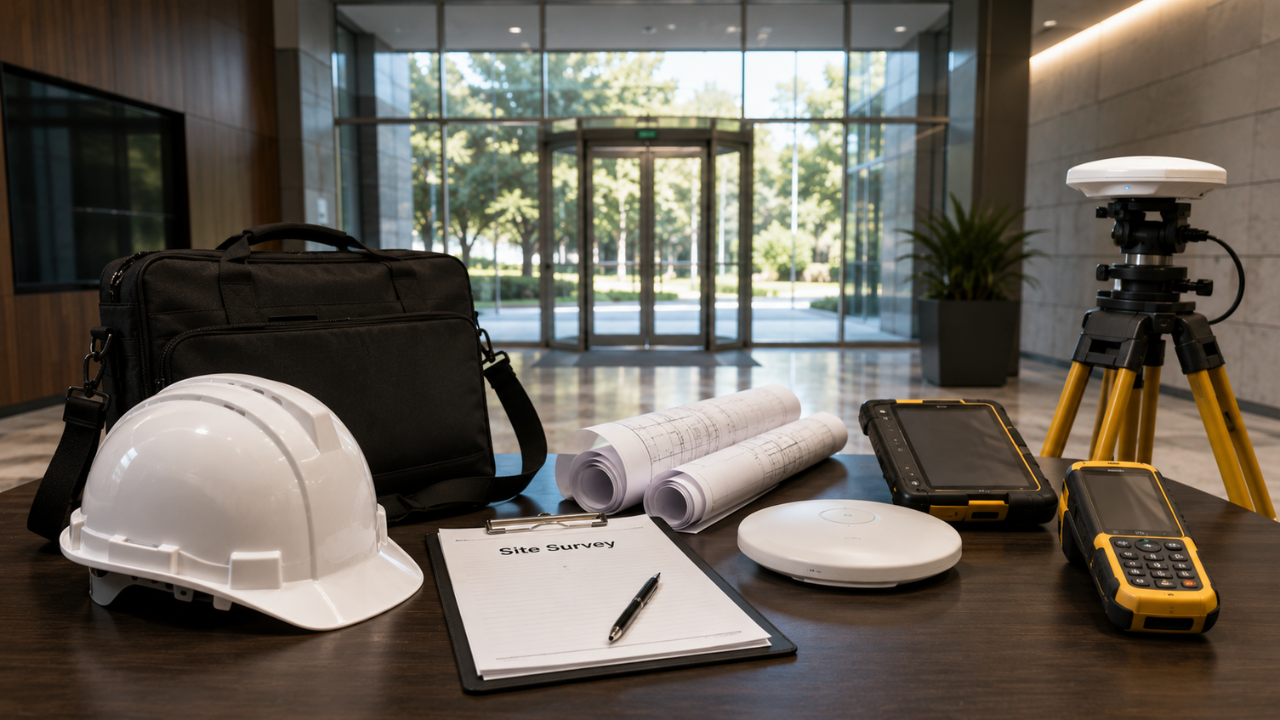
A Wi-Fi survey statement of work helps everyone agree on what success looks like before we start testing. It explains what we will assess, how we will perform the work, what we will deliver, and how you will review and approve the results. More importantly, it connects the technical side of wireless testing to the way your people actually work, whether that means voice calls, warehouse scanners, video meetings, guest access, mobile devices, or high-density spaces.
We define the scope clearly so there are no surprises. That includes whether we are designing a new wireless network, assessing an existing one, troubleshooting known issues, or validating a recent installation. We also identify every area included in the work, such as buildings, floors, outdoor spaces, warehouse aisles, production zones, and restricted rooms.
We keep the statement of work focused on outcomes, not just tasks. Current federal acquisition guidance favors performance-oriented requirements because it starts with the result that needs to be achieved. We take the same practical approach for commercial Wi-Fi projects by defining the coverage, capacity, reliability, security, and documentation outcomes your environment needs.

An on-site Wi-Fi survey is the better choice when your project depends on real measurements from the actual space. A remote survey works well for early predictive design or repeatable sites where the documentation is accurate and complete.
The right choice comes down to what you need. If you need an estimated design, remote work may be enough to start. If you need proof of what is really happening inside the facility, we recommend going on-site.
Choose an on-site Wi-Fi survey when the building is already occupied, the current network is having performance issues, or the environment has unknowns that could affect signal quality.
When we walk through the space, we can see the things a floor plan will not show clearly. That includes wall materials, machinery, shelving, reflective surfaces, interference, mounting limits, and how people actually use the network. We can also confirm whether documented access point locations match what was actually installed.
On-site work is usually the right fit for active testing, spectrum analysis, roaming validation, post-installation acceptance, and harder environments like warehouses, hospitals, manufacturing facilities, schools, and high-density venues.
It’s also the better option when users report problems in specific areas, such as dropped calls near stairwells, slow scanners in warehouse aisles, or unreliable connections in conference rooms.
A remote Wi-Fi survey can work well when we are creating a predictive design and you can give us the details needed to make the model useful. That usually includes:
Remote design is also a good fit for standardized branch locations, early budgeting, construction planning, or spaces that have not been built yet.
What it cannot do is measure the local radio-frequency environment directly. That means we may not see:
That’s why we treat remote predictive design as a strong starting point, not the final answer. The model gives us a clear plan. An on-site validation survey confirms whether the installed network meets the coverage, capacity, and performance goals we designed around.

At Network Elites, before we approve or recommend the scope for a wireless survey, we ask for the details that make the work measurable. We want to understand which methods are included, which areas will be tested, what performance targets apply, and what files we’ll receive when the work is done.
We also ask questions like these:
Clear answers make proposals easier to compare. They also help us make sure a basic heat map is not being treated like a complete wireless assessment.

When we scope a Wi-Fi survey, we look at the details that affect your network every day. That includes your locations, users, devices, key applications, floor plans, survey approach, deliverables, responsibilities, schedule, assumptions, and how we’ll confirm the work is complete.
On-site surveys give us the clearest picture when we need to troubleshoot problems or validate performance. Remote surveys can help us move faster when floor plans and building details are accurate. In many cases, we use both. We start with remote planning, then verify the finished network with on-site measurements.
Talk with our team to build a Wi-Fi survey statement of work around your facility’s coverage, capacity, security, and performance needs.

Protect against loss and crisis.